Stick-built and timber-frame combined
Noah Bradley2019-06-29T11:00:23+00:00Okay… it’s time to put the old house back up.
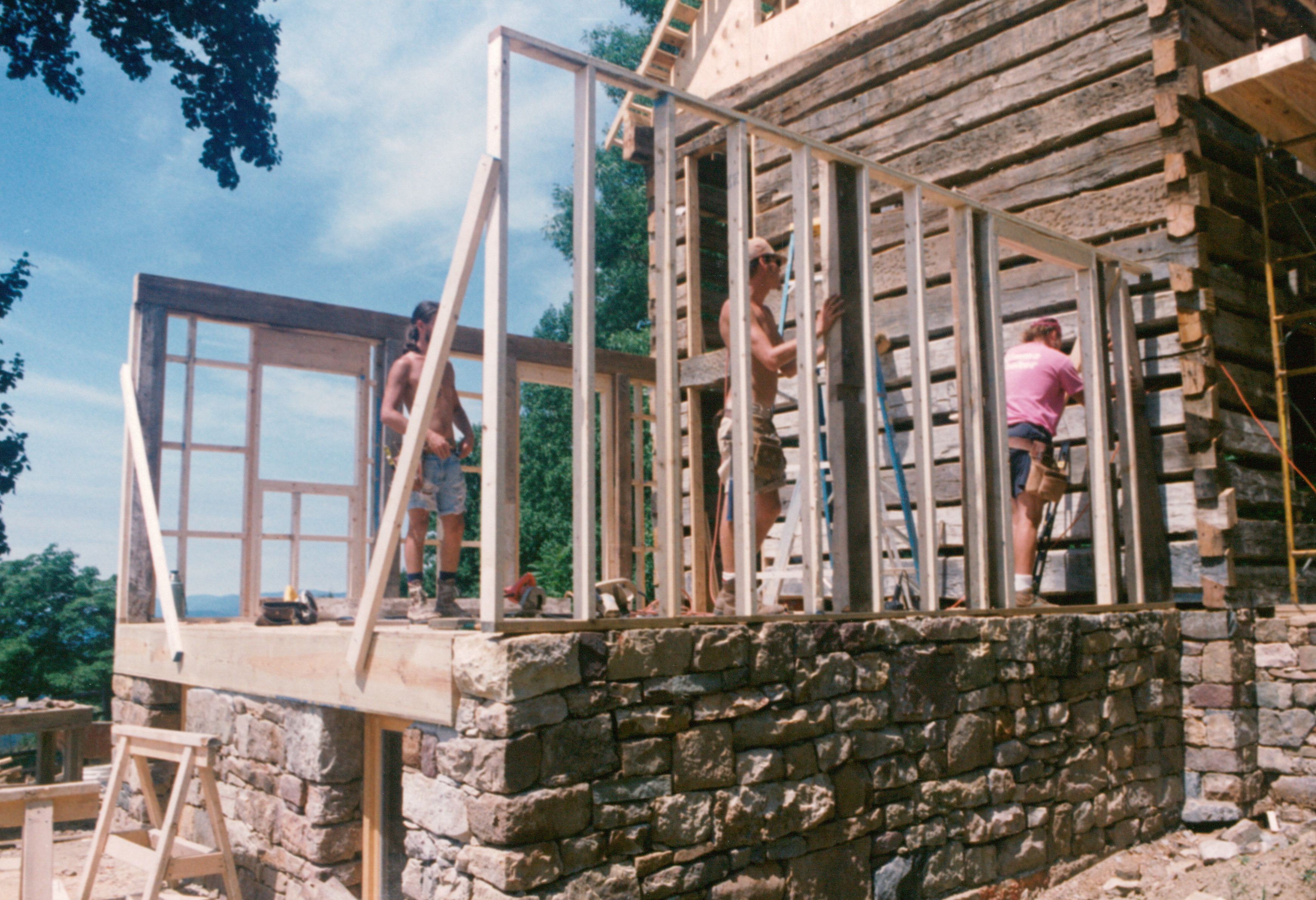
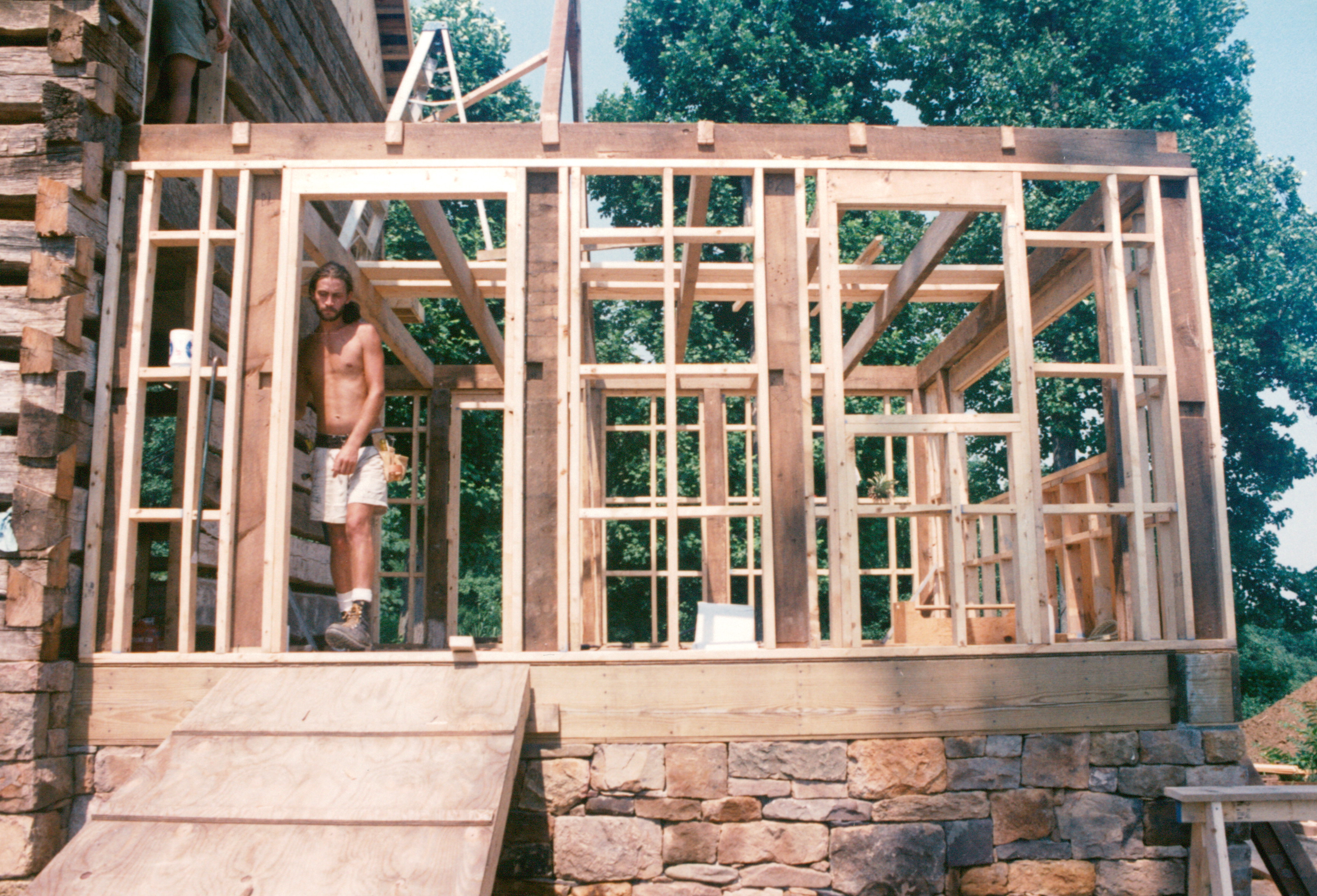
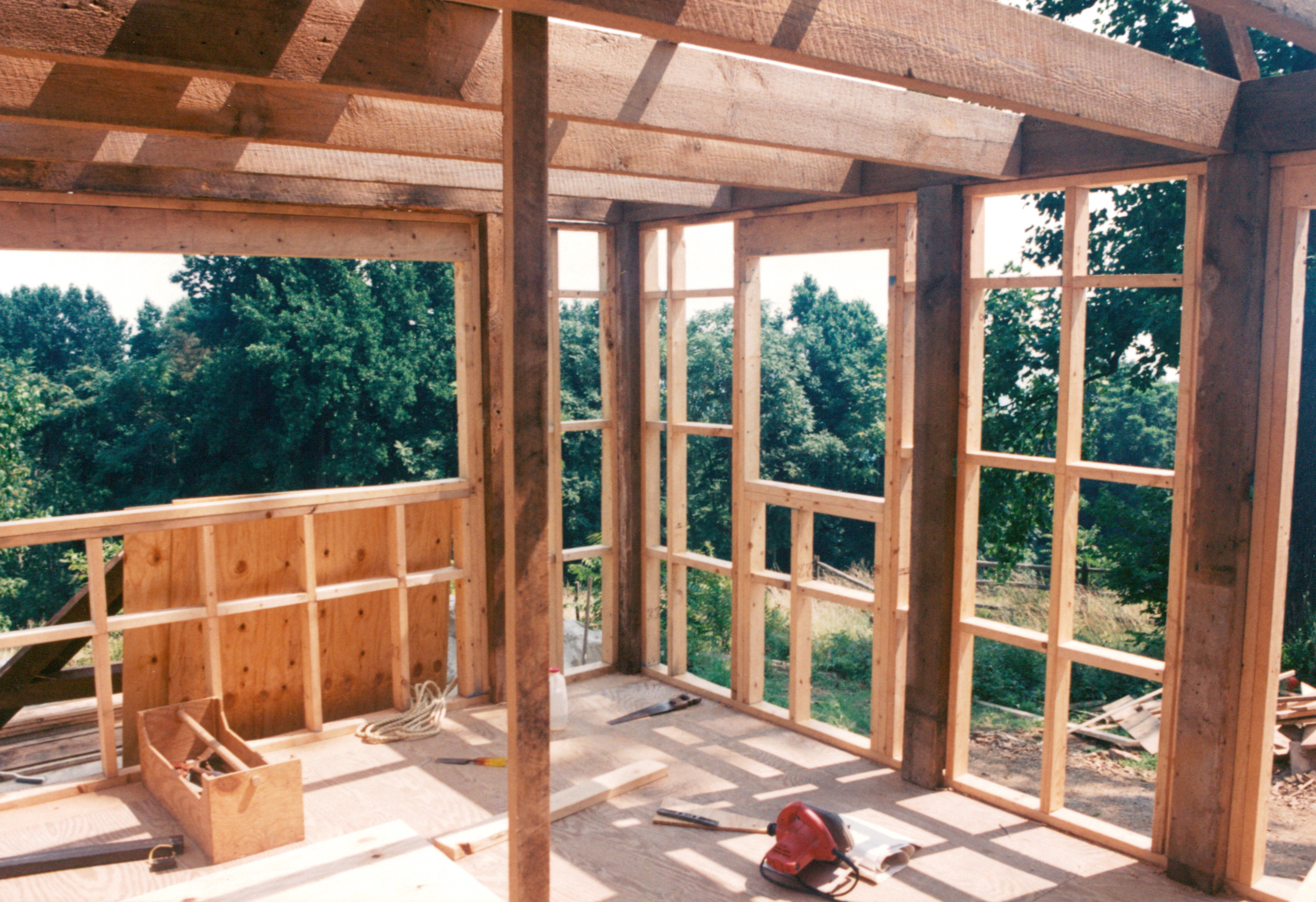
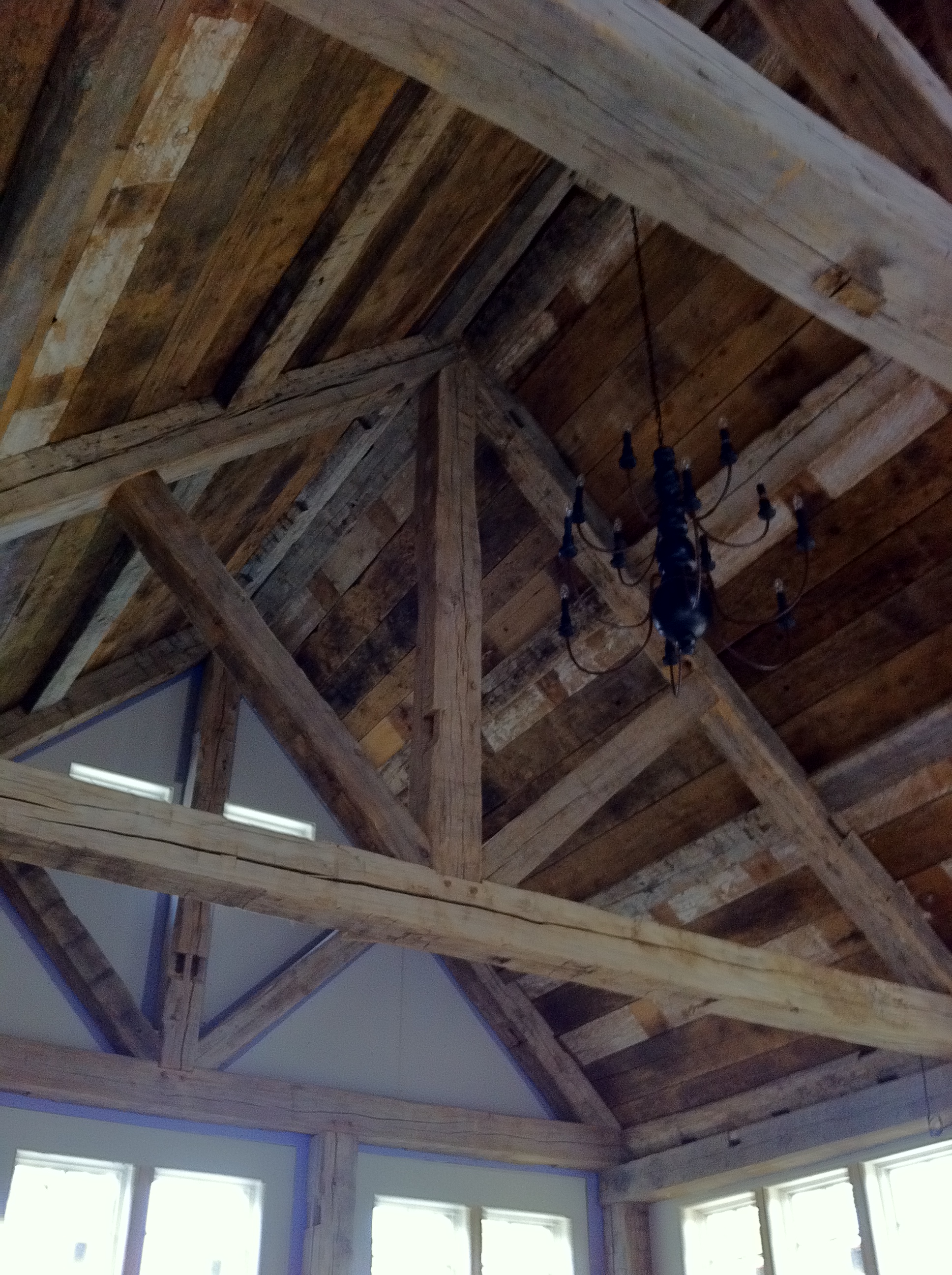
We decided here not to use stress skin panels but rather we would built standard 2by6 exterior walls and then build the old timber frame on the interior of those walls to be seen and appreciated for decades to come. (no real reason for that… I guess there just wasn’t enough of material needed to bother ordering panels)
For all the stone work enthusiasts out there let me point out one feature of the stone that makes it attractive… depth and roughness. Smooth surface stone will never give you the play on light as do rough faced, jagged stone.
Once the walls were all framed up we started with the rafters.
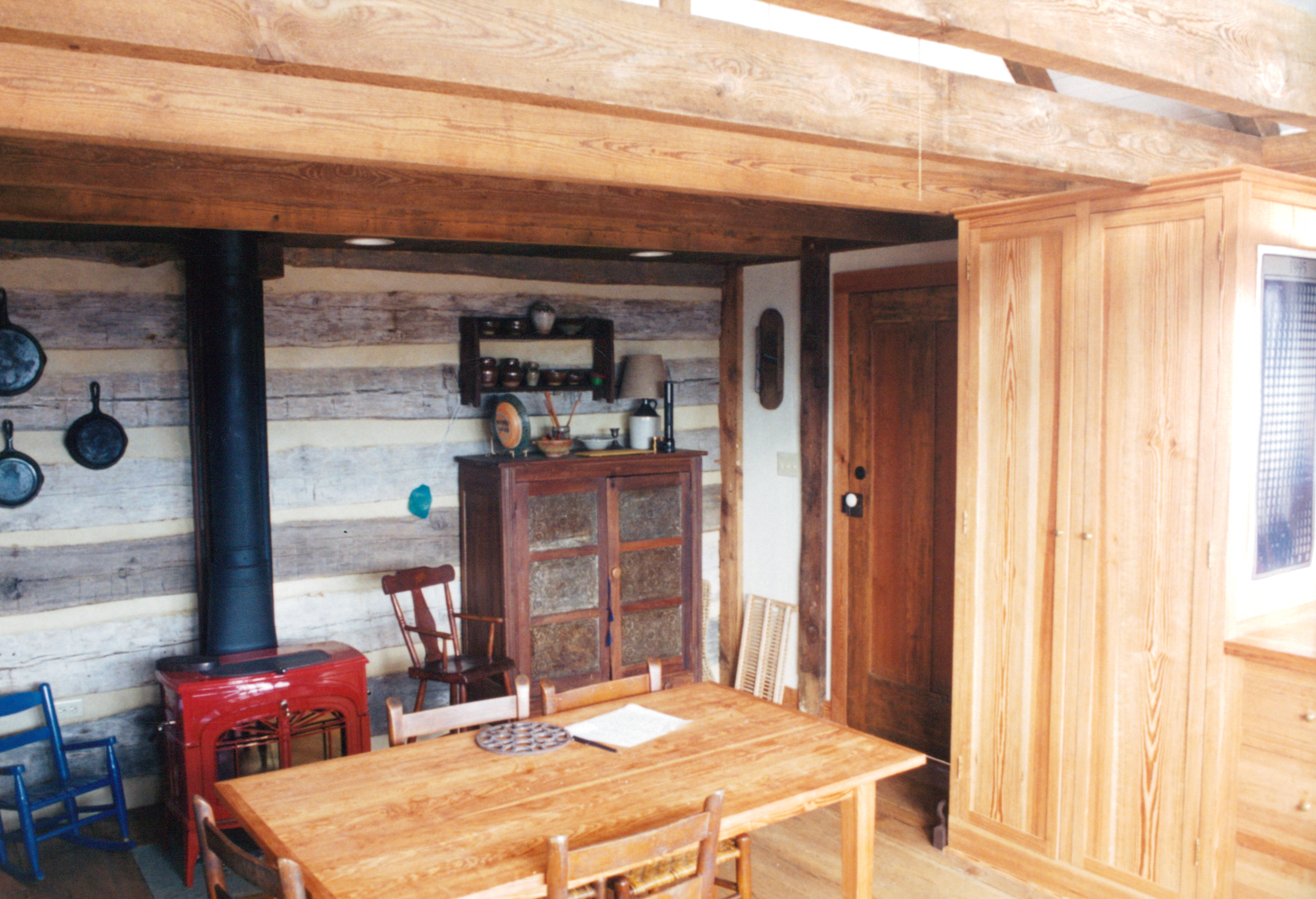
We could then start to get a sense of what the finished kitchen would look like.
The slow demise of timber framing
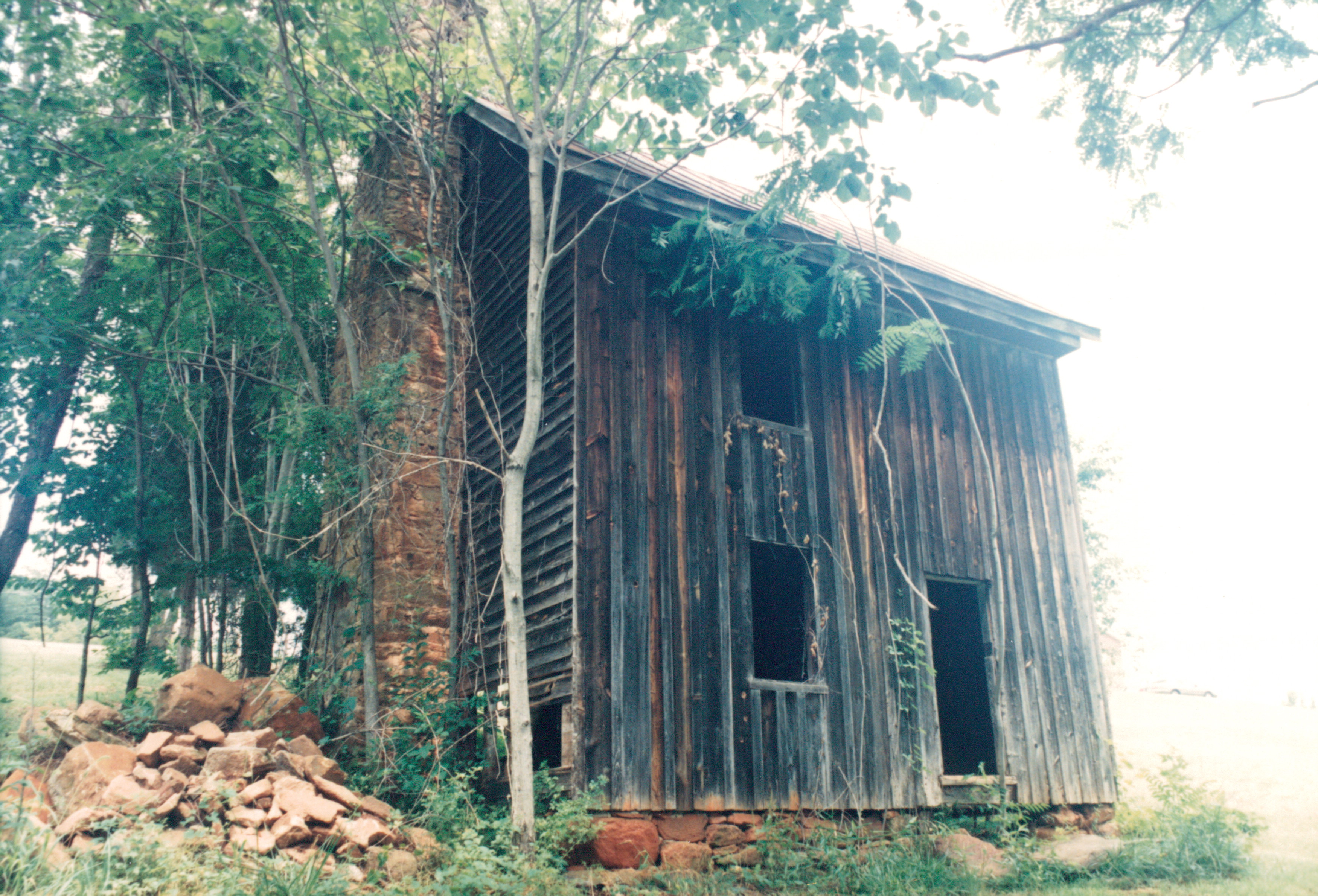
Noah Bradley2019-06-29T11:00:21+00:00This is how the addition off of the log cabin started out… with a worn out mid-1800’s home scheduled to be torn down.
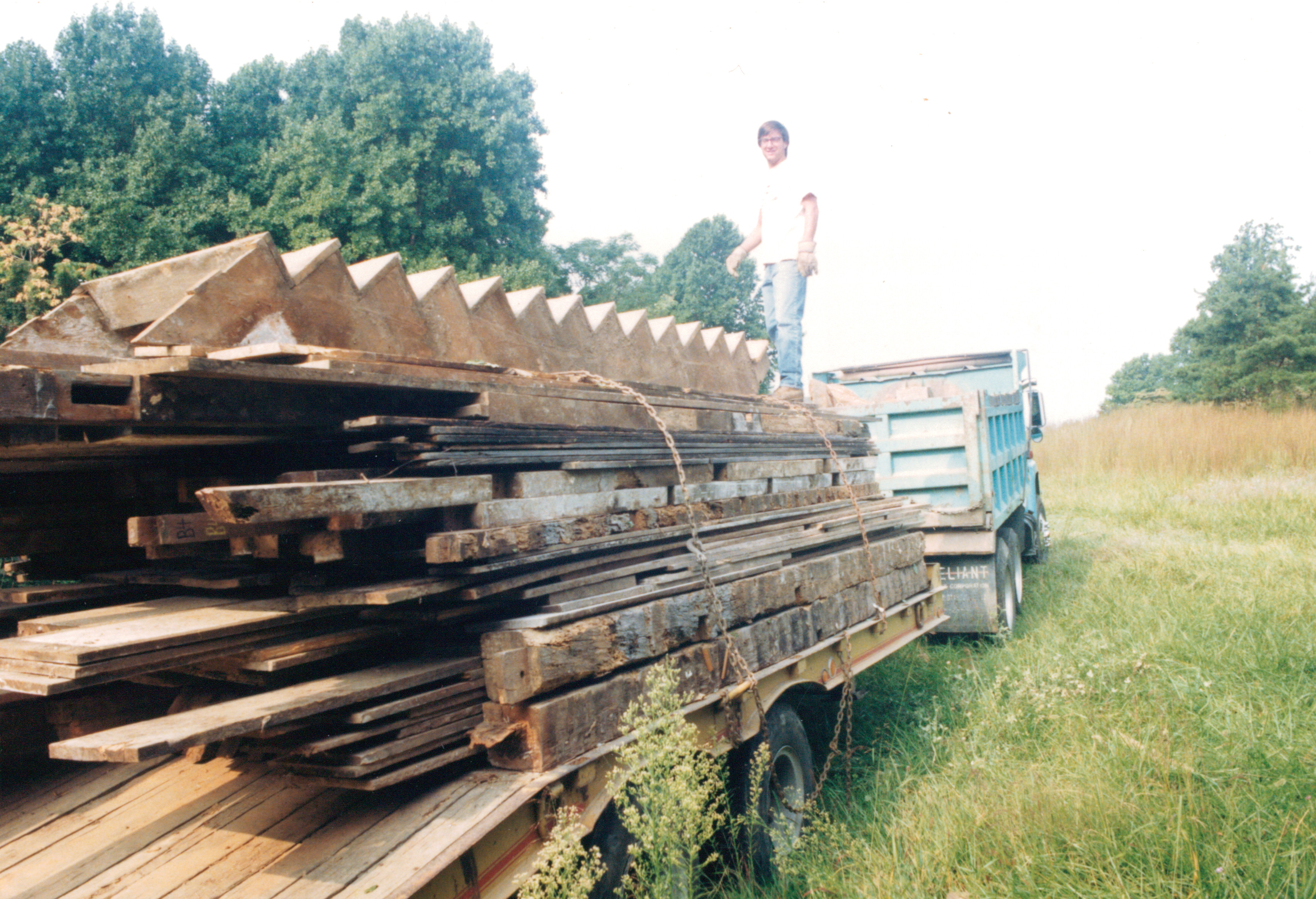
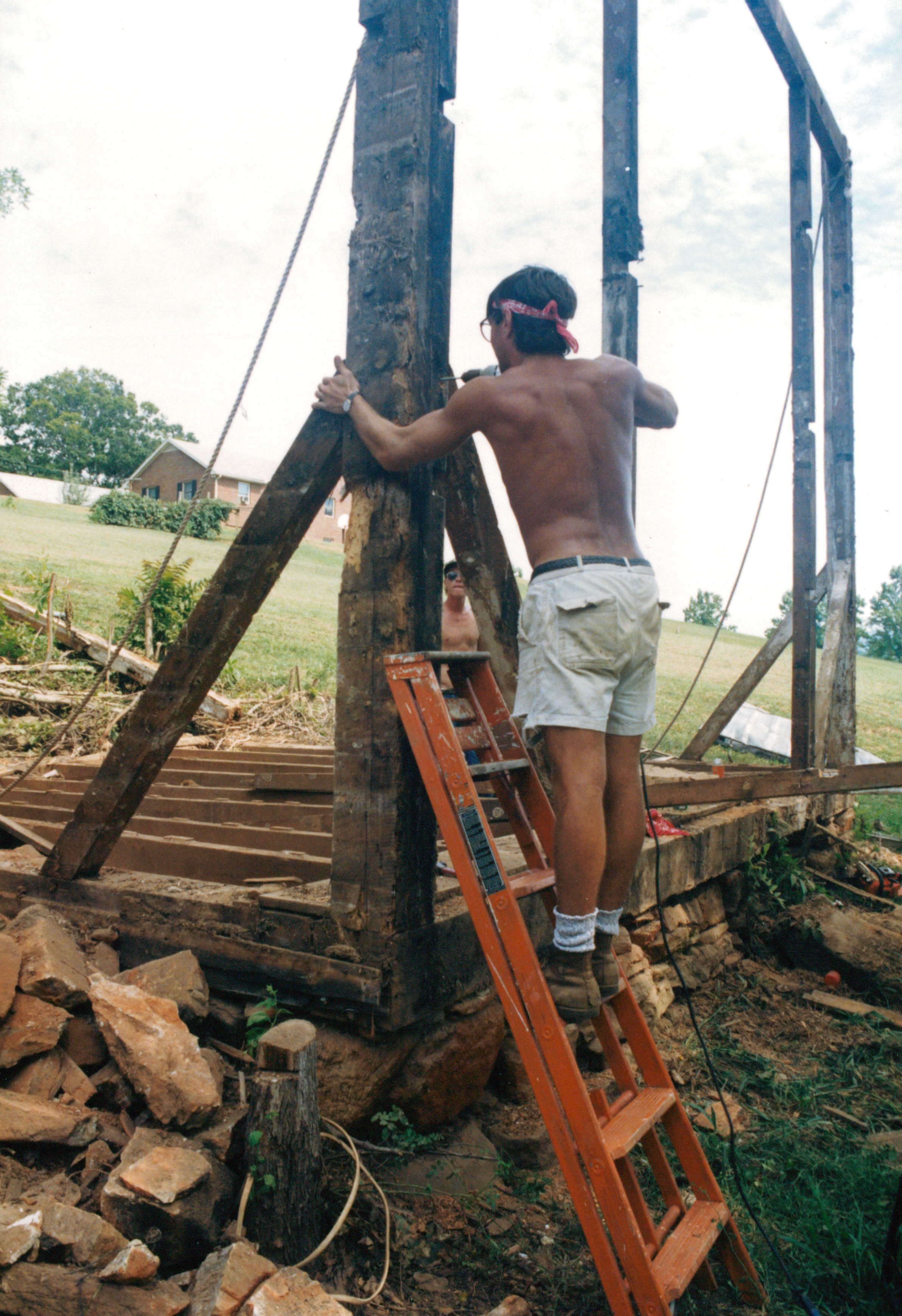
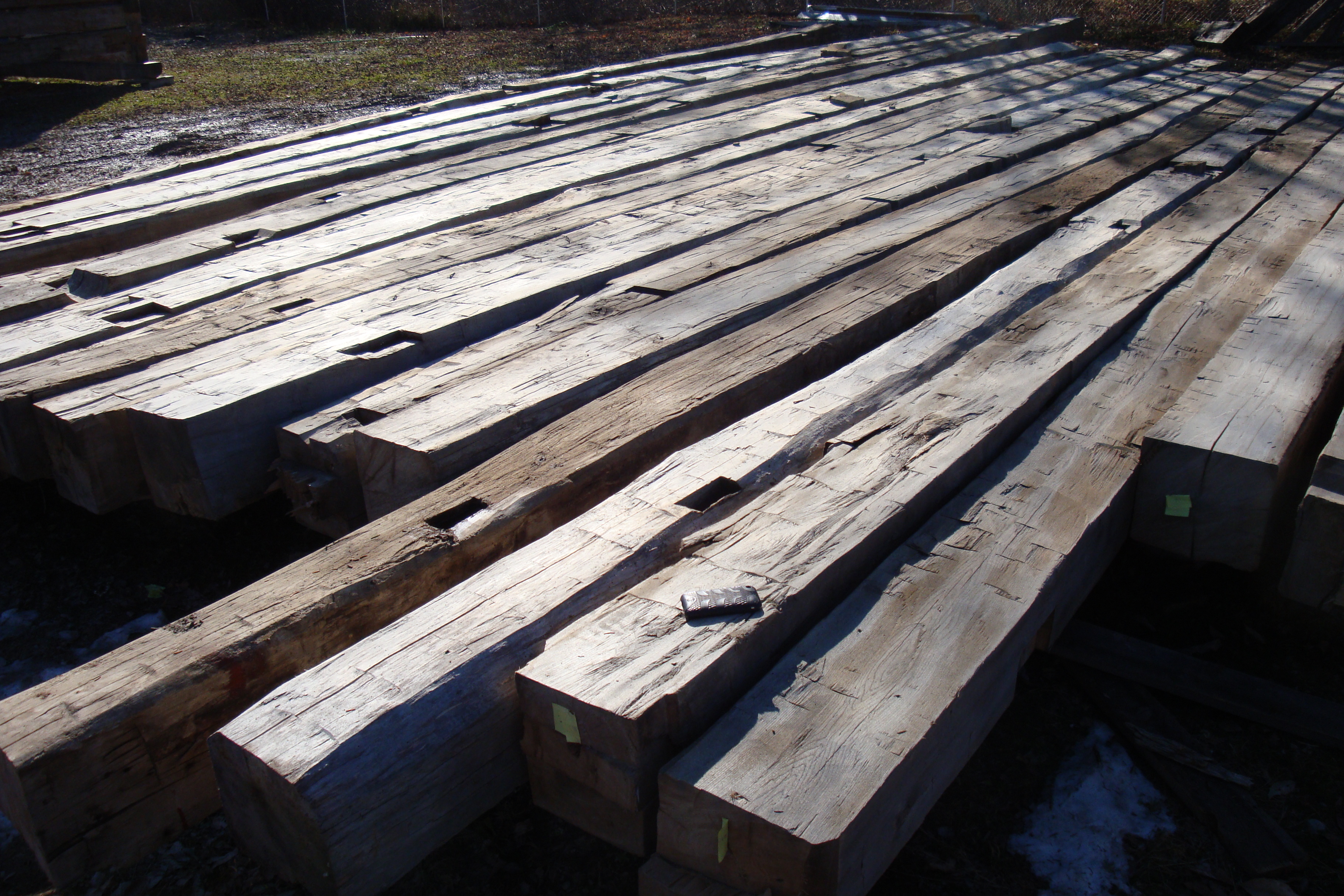
She wasn’t much to look at… but her frame was built well (which is why she was still standing) and I needed a frame.
Notice the original siding on the chimney end.
The frame of this home was like nothing I had seen before. It clearly was built in a transitional time of construction.
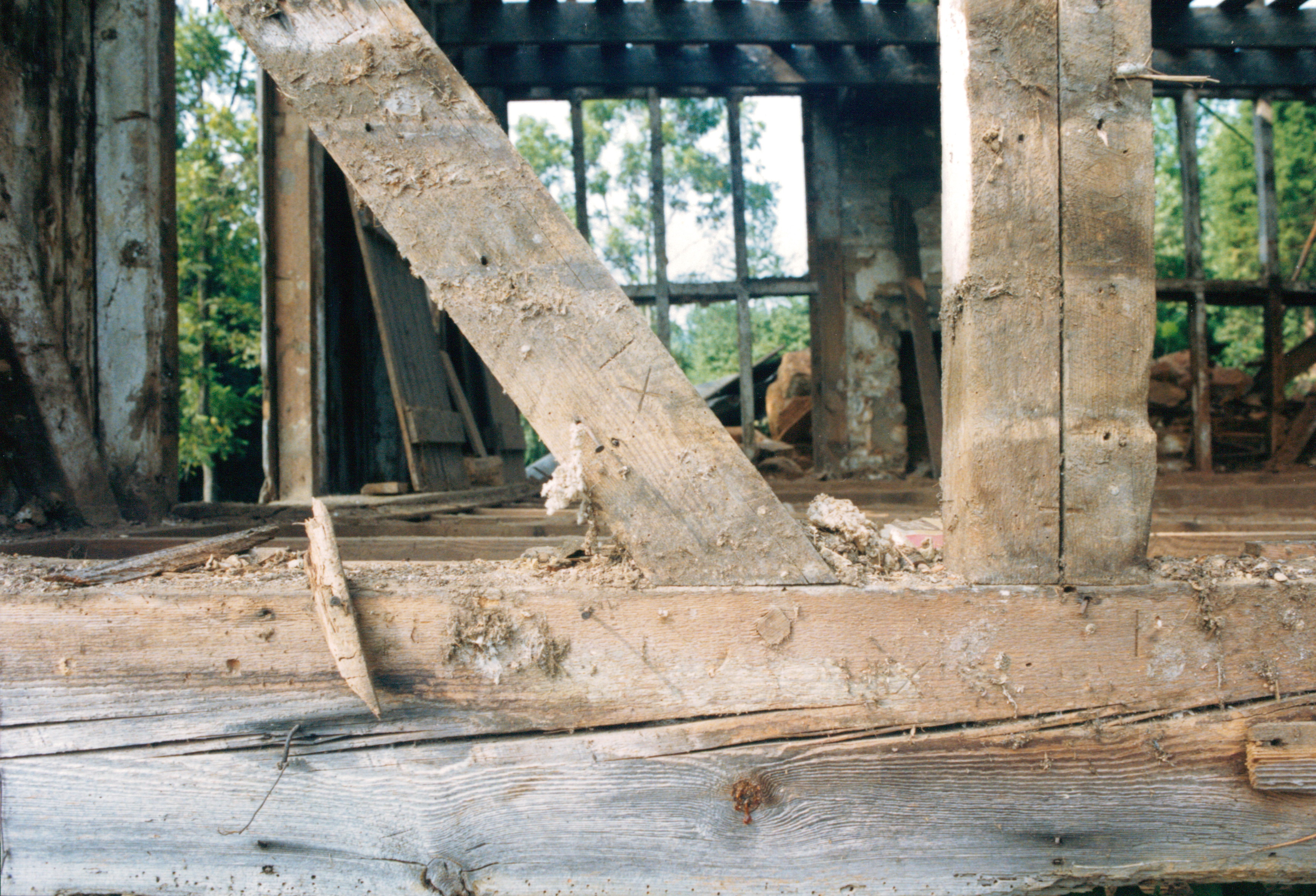
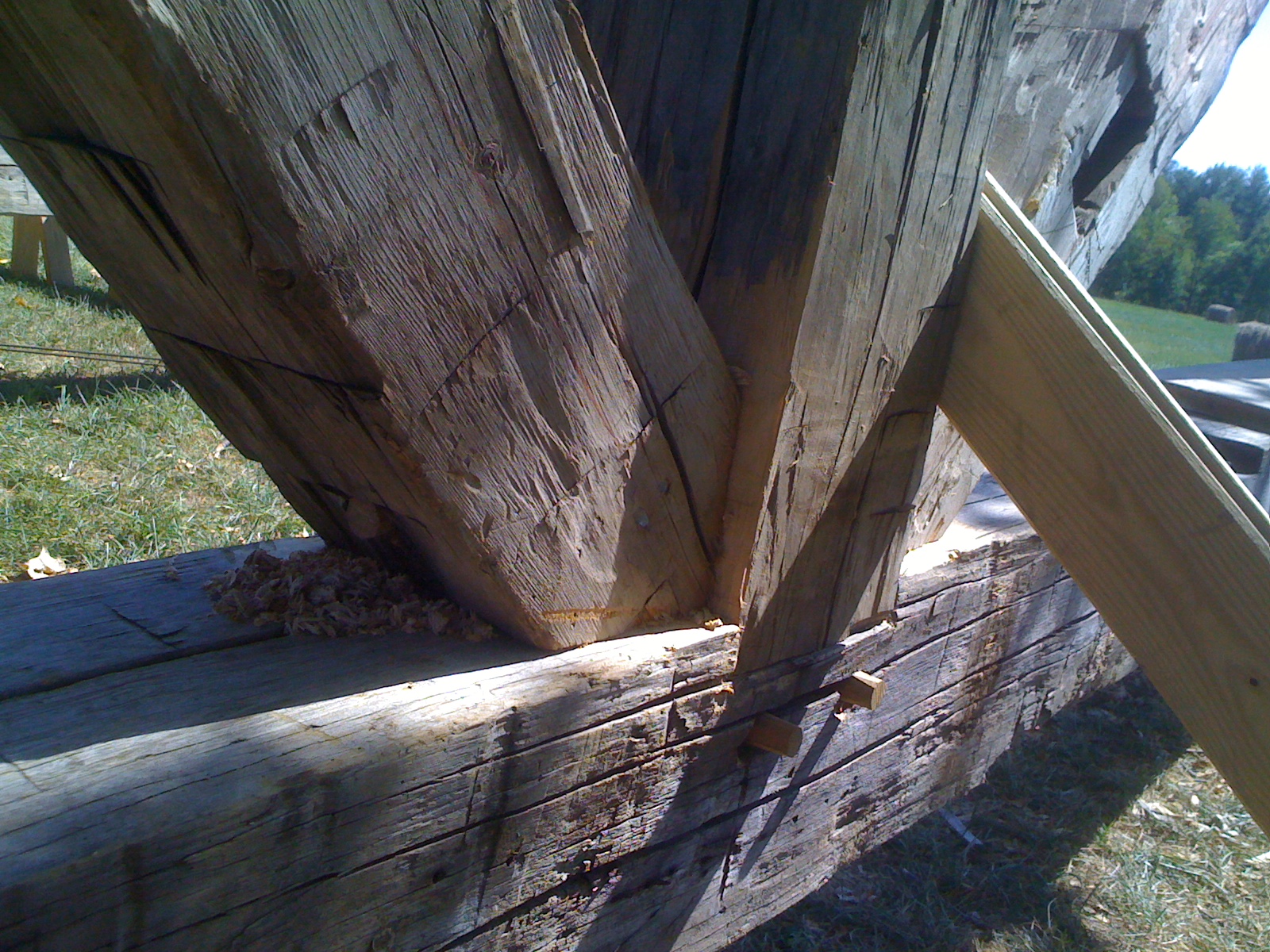
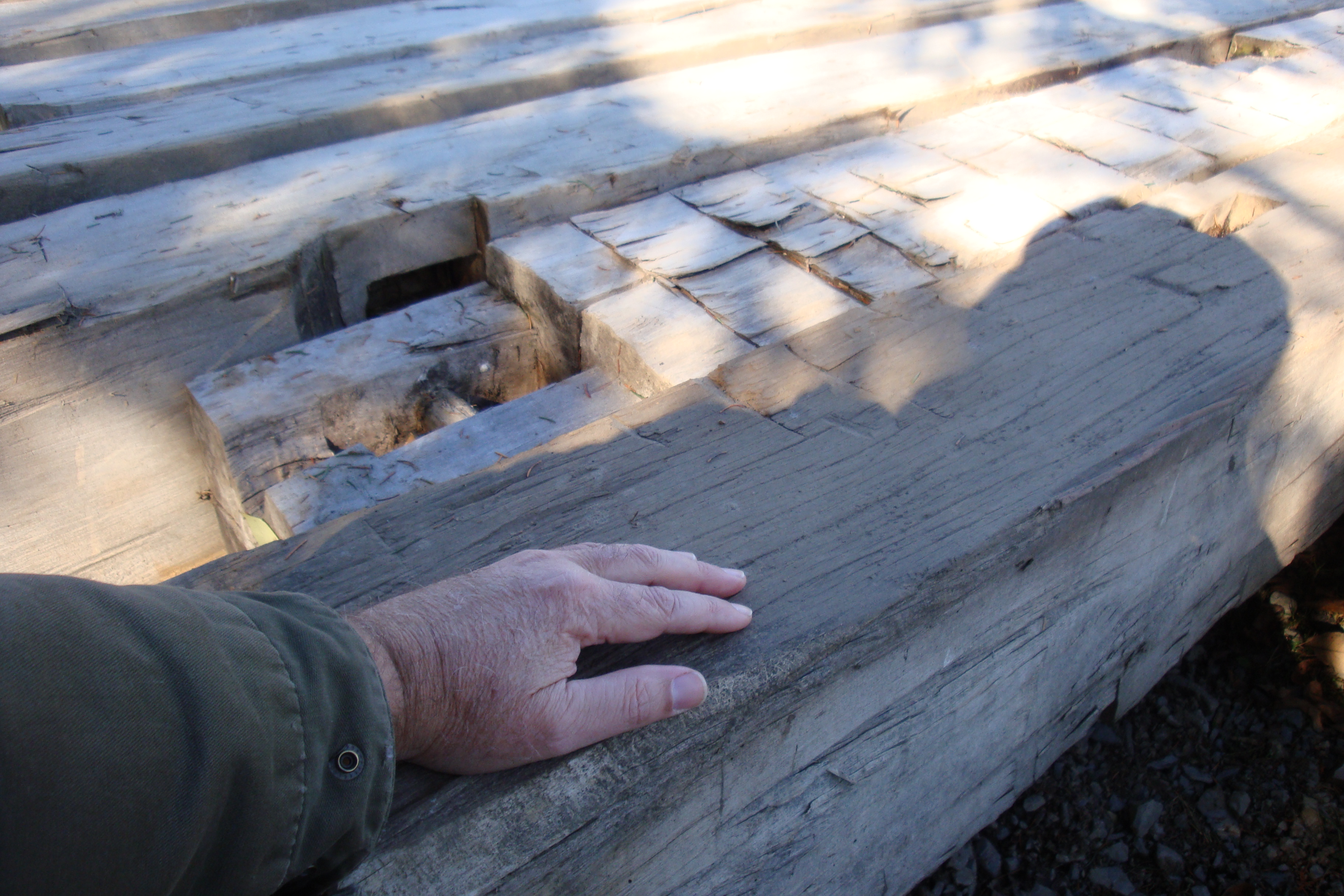
The timbers were smaller than in the older homes that we had previously experienced but the mortise-and-tenon joints were still each carefully marked with roman numerals, (as seen in the photo above). Each of these joints was held in place with a wooden peg (many of which we had to drill out).
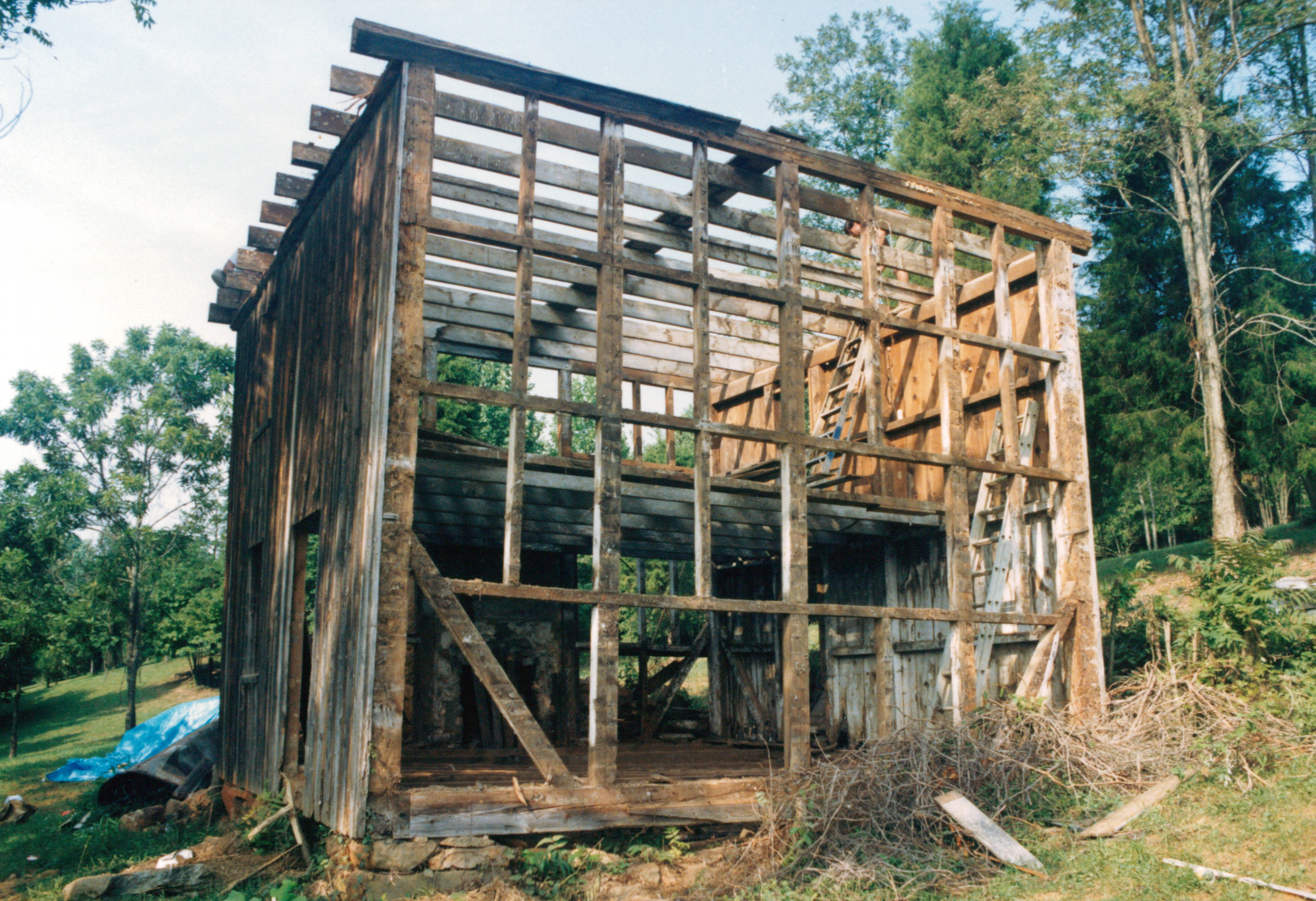
But what made this frame unique, in my experience at least, was the grid type appearance. So many horizontal framing members… hmmm… why would they be there?
The only time I ever install horizontal framing is when I know I’m going to put up board-and-batten siding. And that’s what this house had… but… the board-and-batten found here was a form of underlayment on this house which was then to be covered up with horizontal siding.
This is the oldest house that I have ever seen with a layer of underlayment under the siding. This layer contributes greatly in sealing out air infiltration and strengthens our homes today. And I guess that’s what it was doing here… the timbers were getting smaller and an added layer of wood was giving the house the added strength that it would need.
Soon the timbers of our houses would shrink to the size of two-by-fours and the fancy joinery would be eliminated, replaced by a few nails.
The raising of a timber frame
Noah Bradley2019-06-29T11:00:08+00:00Once we completed the floor deck above the basement we set to work assembling the timber-framed wall sections.
All was going like clockwork.
We scheduled for a crane to come in the following day. Within 24 hours we would have a completed standing frame for the world to see!
As fate would have it, when the morning came to raise the timber-frame that the sky opened up and poured upon us.
The forecast called for the rain to pass quickly so we held to our schedule.
The crane was on the way.
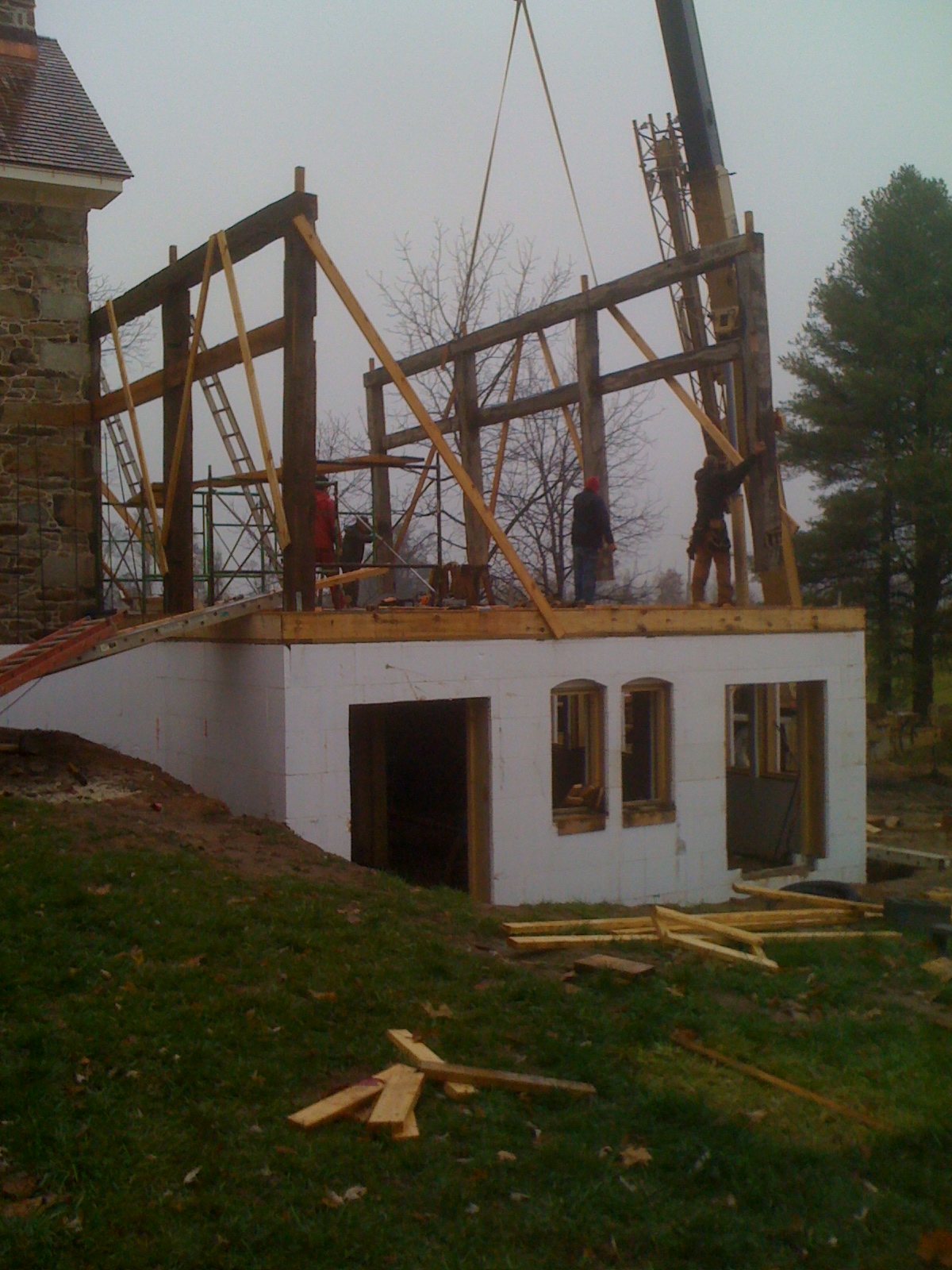
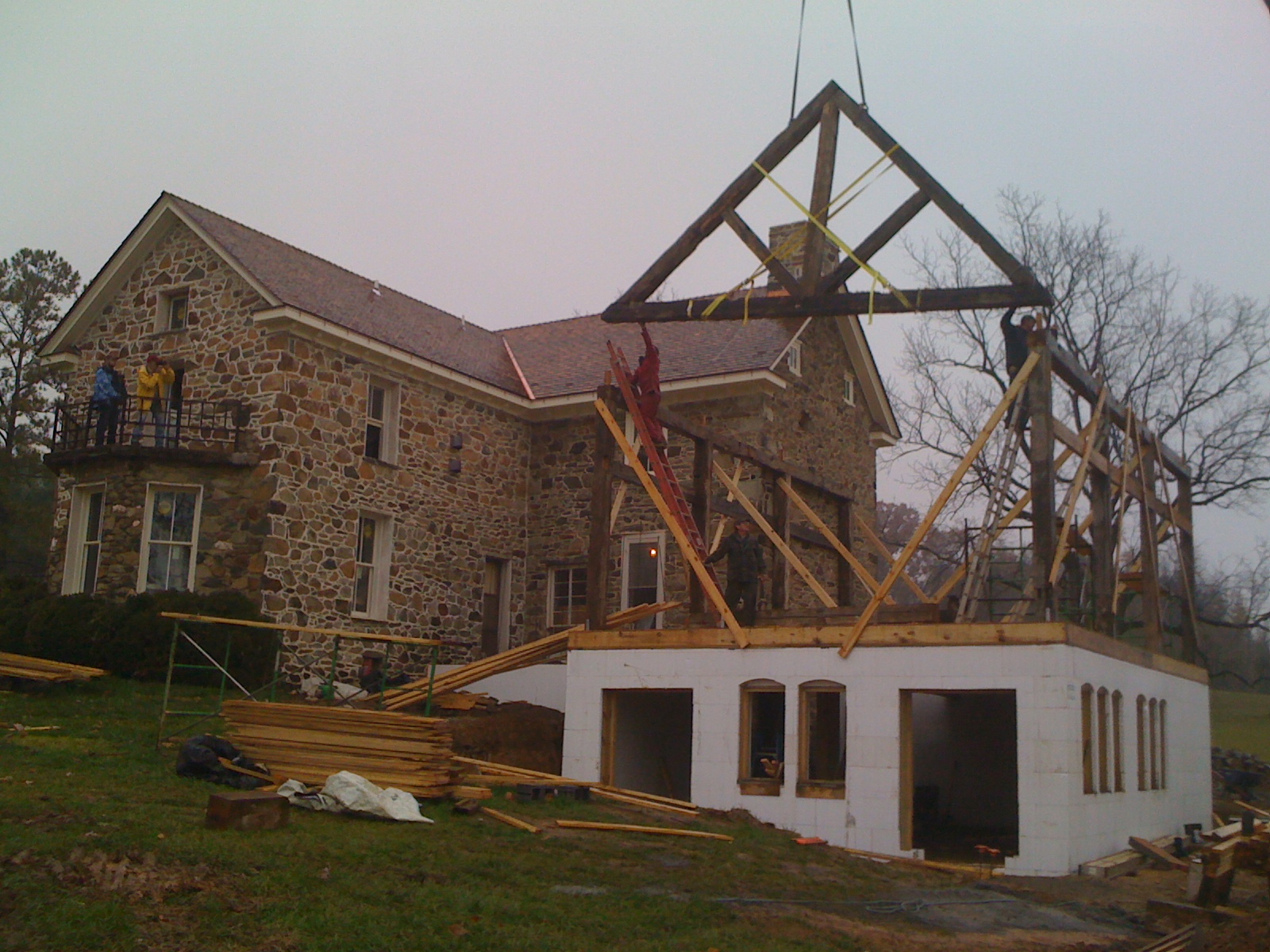
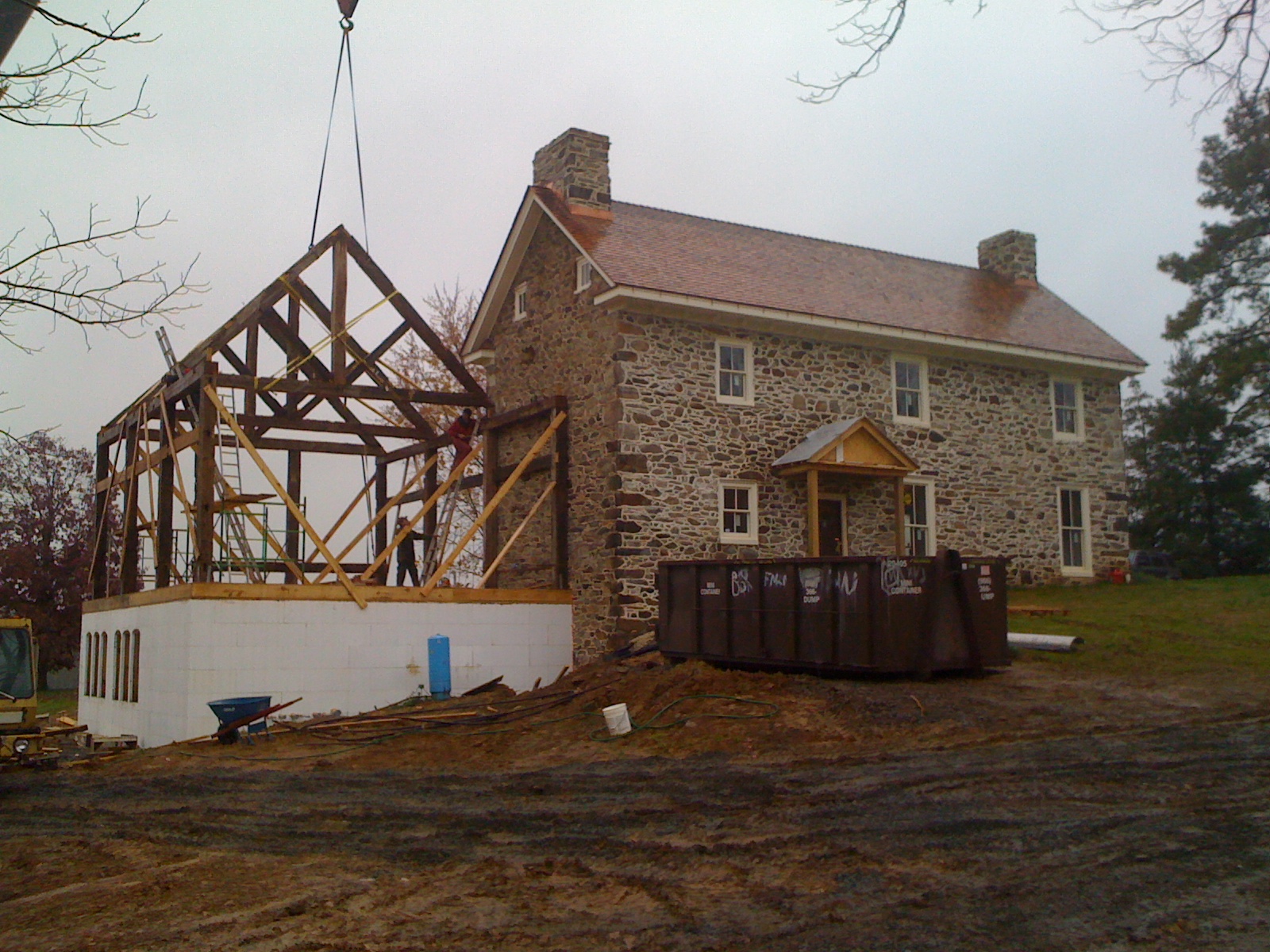
Within minutes of the crane’s arrival the assembled timber-frame walls began to rise.
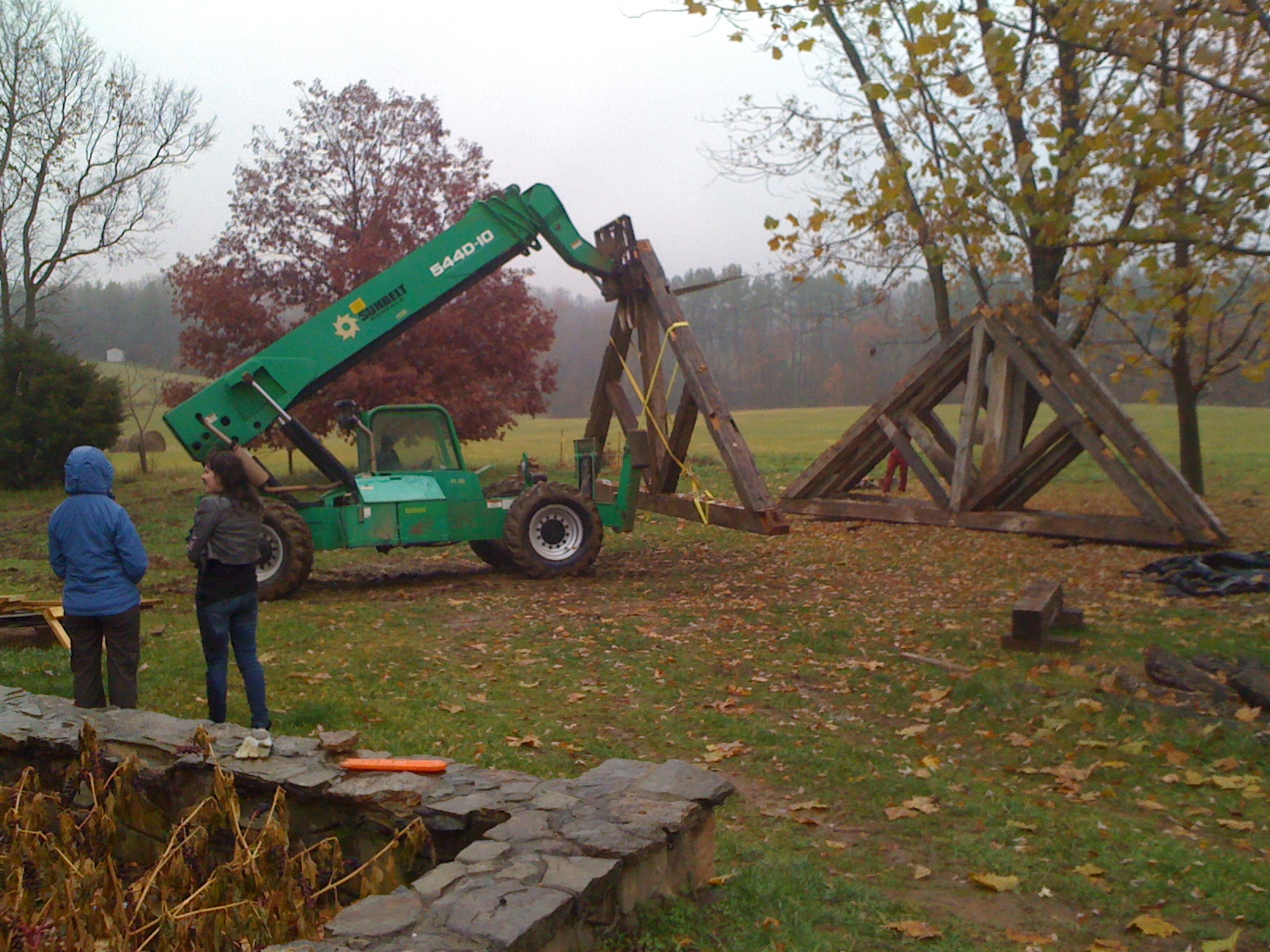
The heavy duty forklift begins hauling the trusses to the area where the crane can lift them into place. Each of these trusses weighs about the same as a small car so without all of this heavy equipment we would be assembling this frame one piece at a time… or be calling in a hundred of our closest Amish friends.
The first of four timbered trusses floats down onto the top plates. I’ve always loved these moments when men reach out as far as they can and first touch a timber as it is set into place.
One after another the trusses are set in place.
Insulated Concrete Forms
Noah Bradley2019-06-29T11:00:07+00:00Once we had the timber-frame members created our attention turned to building the basement foundation that would support this section of the home.
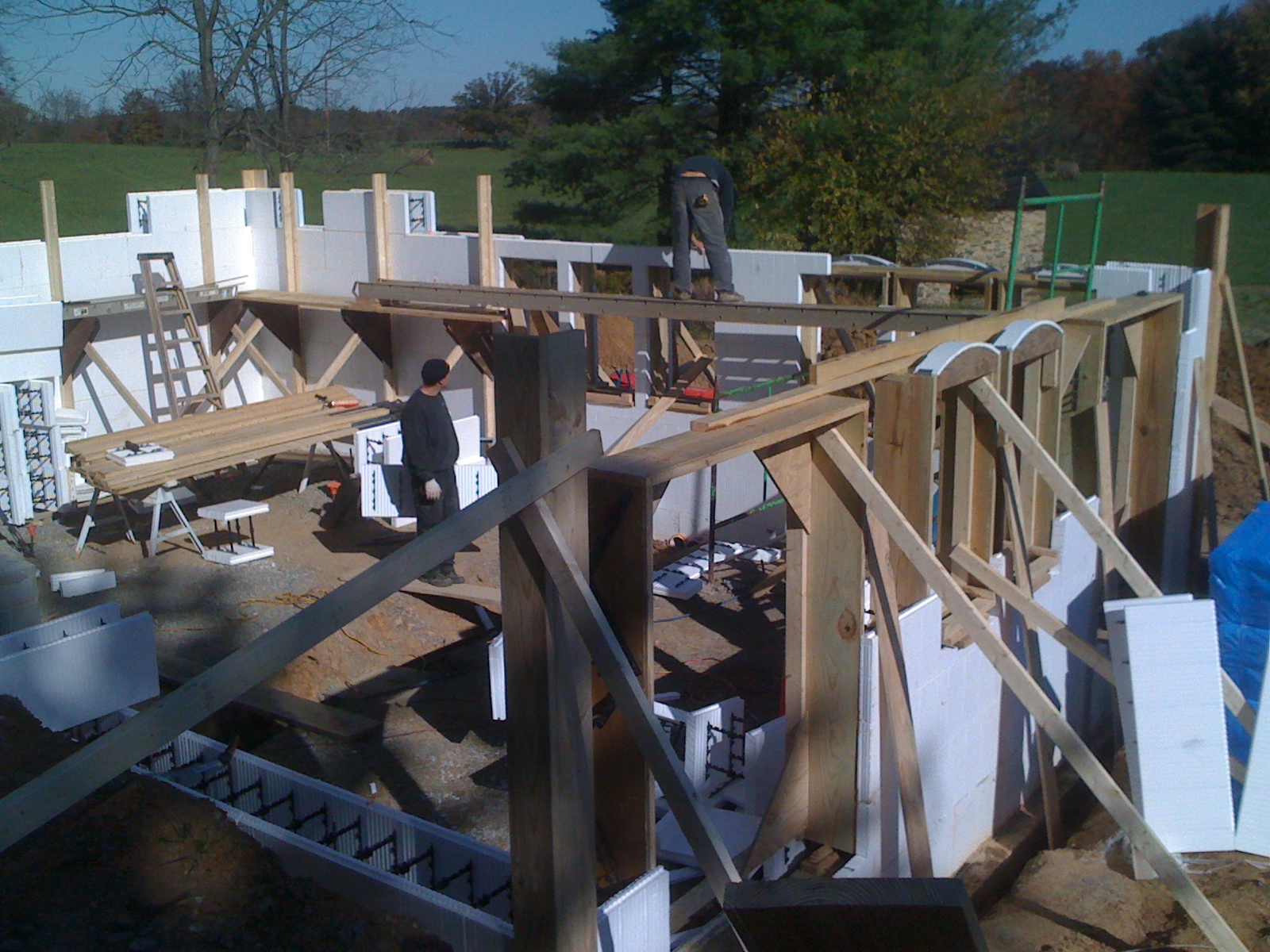
We chose to go with insulated concrete forms (ICF’s). I’ve used these several times now and I really like them. They are easy to use, even for the novice, and they create an incredibly strong and well insulated wall.
The window and door frames are created and set into place and then the area in between is filled in with these hollow foam blocks that are later filled with carefully placed re-bar and concrete.
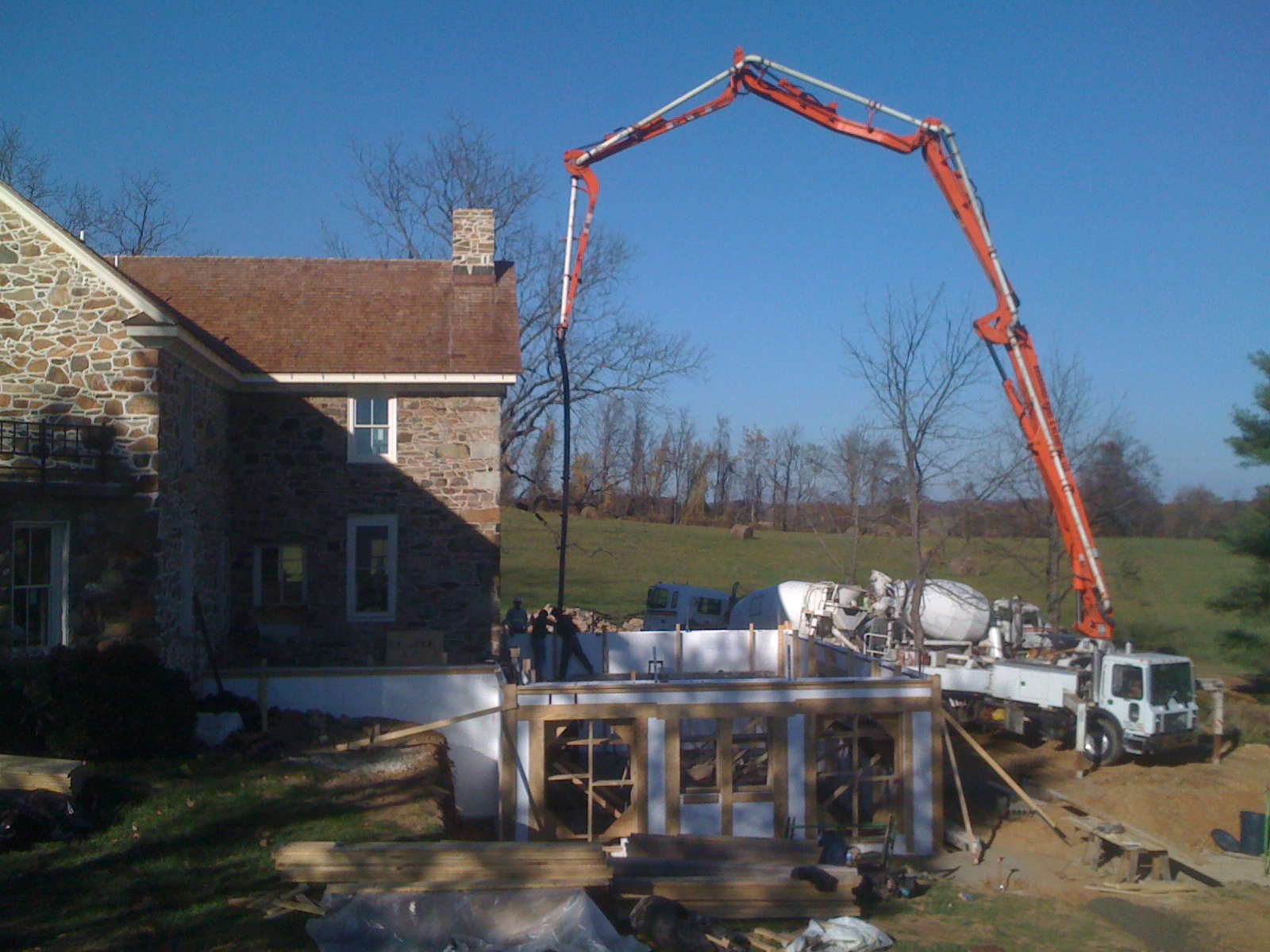
We then called in a concrete pumping truck to fill the insulated forms… by the end of the day we had a solid concrete basement… with R34 insulated walls… ready for a stucco finish on the exterior.
Laying out a timber frame roof system
Noah Bradley2019-06-29T11:00:04+00:00For this particular timber-frame structure I believe 90% of the work was in creating the complex joinery in the top plates and the rafter trusses that would set upon them. The exterior walls of this building were, after all, merely a collection of posts, cut to length, with simple tenons protruding on the upward ends.
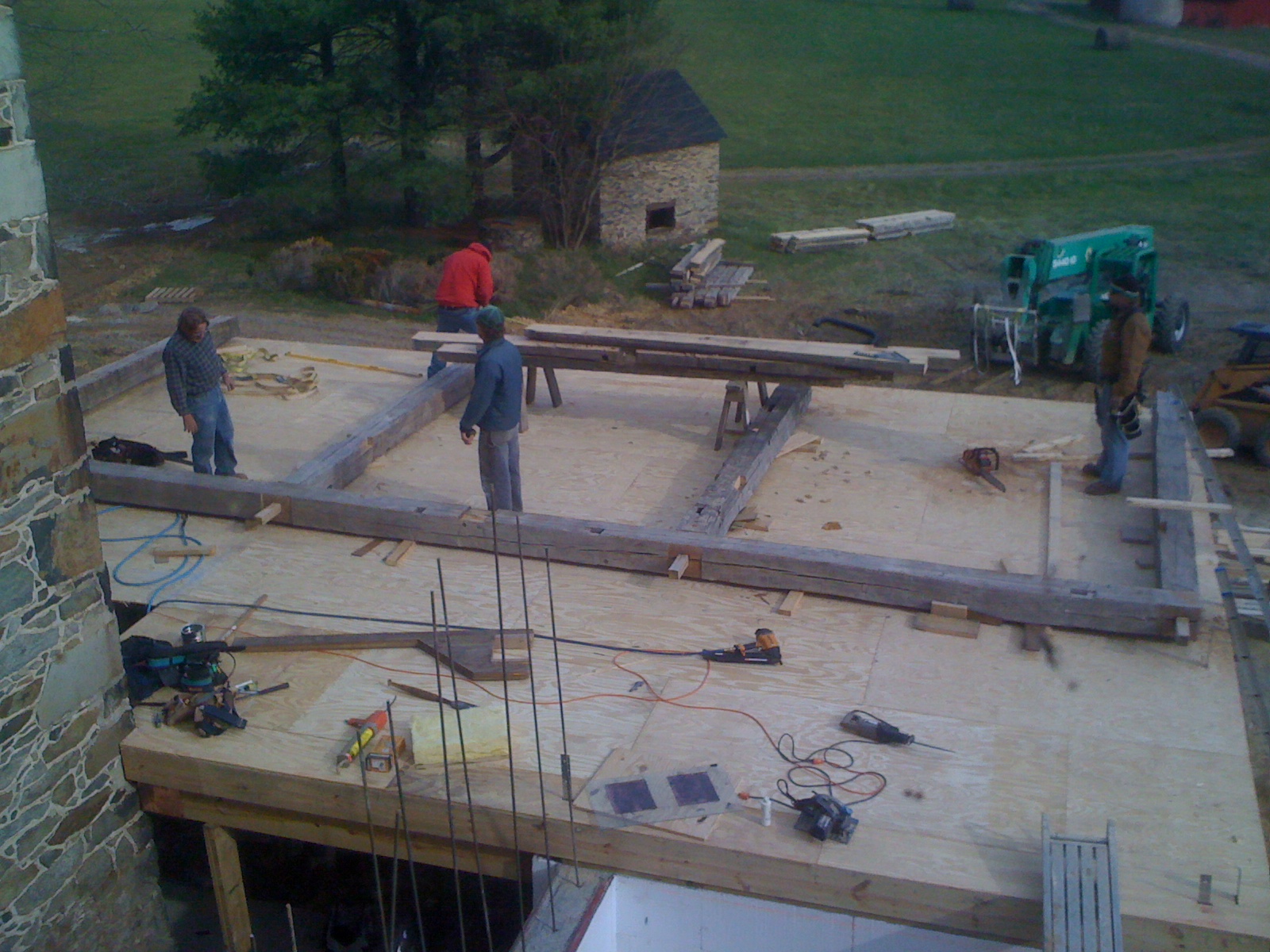
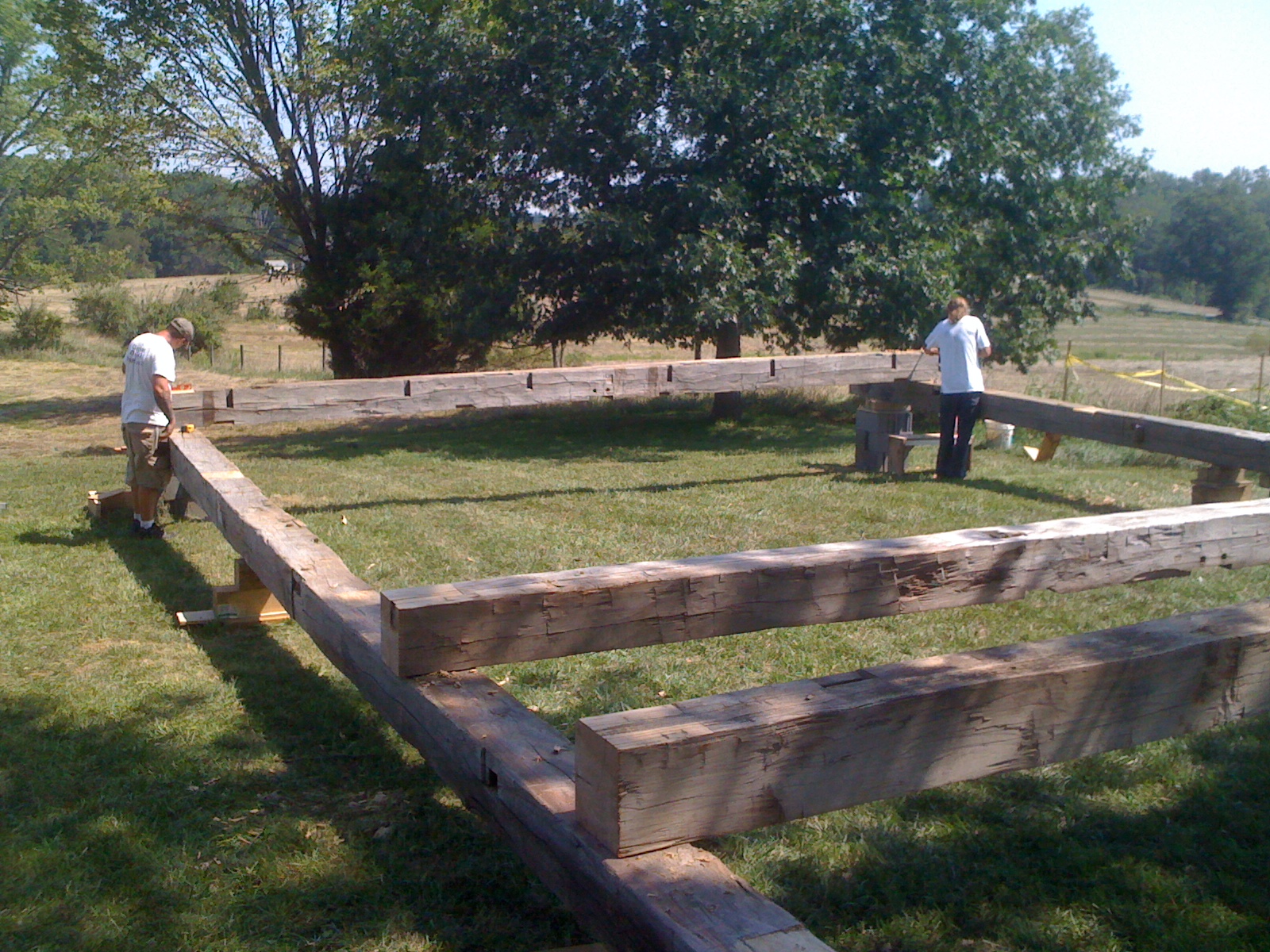
Obviously it made sense for us to cut and assemble as much of this roof system on the ground as we possibly could. So, we began by laying out the top plates as seen in this photo.
I cannot express the giddiness that carpenters feel when given the opportunity to put together something like this. For us, it was Christmas in July. (Of course, being men, we wouldn’t let anyone know that we were giddy… that wouldn’t be very manly would it? lol )