“Butt and Pass” method of building log homes and cabins
Noah Bradley2019-06-29T11:10:22+00:00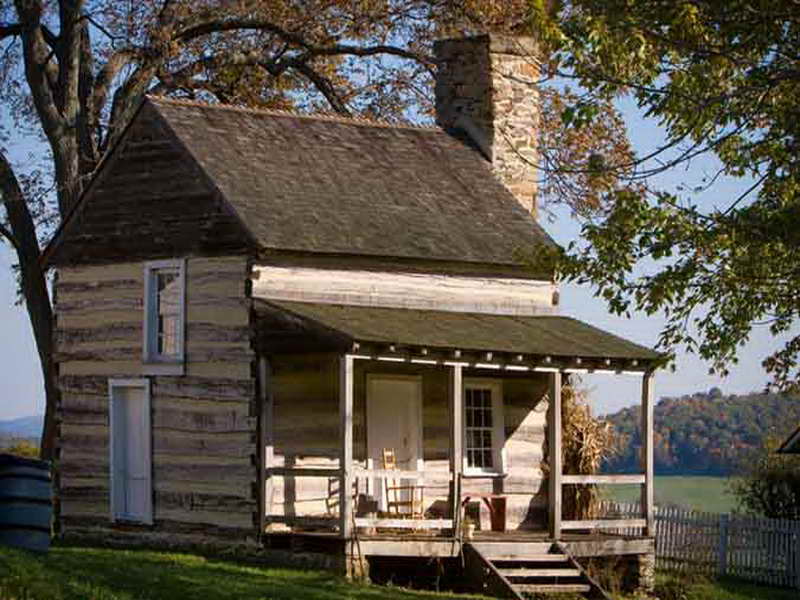
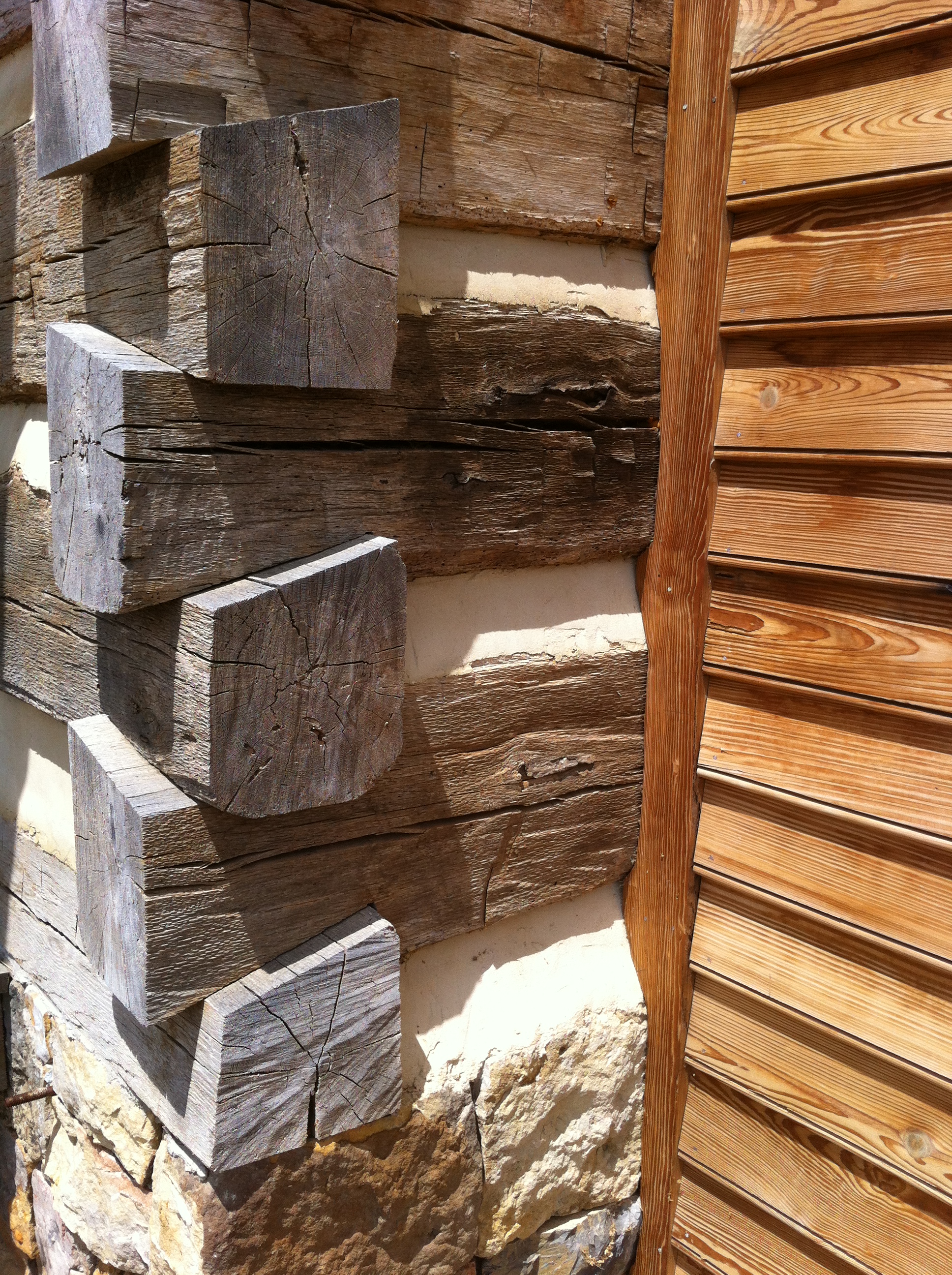
I am frequently asked for my opinion of the “butt and pass” and/or “interlocking” method of log construction. Some folks seem to think there is a big difference between the two, others use the terms interchangeably as if they are same. Both are attempts to bypass the elegant and critical corner notches of a quality-built log home and replace these vital key features with a few boxes of screws, or scrap pieces of rebar, hammered into place.
Go figure.
Rather than having to repeat myself over and over I thought I might share my opinion here with everyone today.
And, in order to make things simpler, I will stick to one single term for any home built from a pile of large sticks of lumber which are held together with nails, spikes, screws, or chewing gum, as…. “Butt and Pass”.
The main sales technique that this industry uses to bring in those seeking to build their first log home is often through the planting of the seeds of fear that the average person might somehow be incapable of creating a corner notch, and also through making dubious promises that less time and effort will be needed to build one’s future home by using this “new and improved” method. This is shameful, and misleading.
There have been hundreds of thousands of traditionally-built log homes created by homeowners, over the course of several centuries, who never once built a log home before. Most of these individuals lacked the education, tools, and resources that we have available today. Back then there were no books to reference, no YouTube videos to watch, no Amazon to deliver tools to their doors, and yet somehow they put together homes that we marvel over today and yet we feel somehow feel disadvantaged and incapable of building a cabin of equal quality ourselves?
The average time to completely notch and assemble a traditional log home with a team of four men today is two weeks… How much quicker can a “butt and pass” cabin be built? IF there is any small savings of time… would it be worth the loss of precious corner notches in order to gain another day or two sitting on a couch?
Come on now!… what’s the hurry?
Putting up a cabin is an enjoyable activity… we should savor the experience, and be thankful for it! (not try to get it over with as quickly as possible)
For most people, the opportunity to build ones own dream home comes around only once in a lifetime. When we get done with the process of building our home would we rather take pride in its craftsmanship? or in the fact that we built it as fast as we could?
When has fast ever been better? Does anyone actually prefer fast food? The whole point in owning a log cabin is to have a home that is carefully crafted… if we want fast and easy… there is always vinyl siding.
Claims are also made that this “butt and pass” method is stronger, but no documentation is ever offered. Curious.
And how is that the logs used in this manner don’t season and settle (as it is often promised)? If you go this route, make sure and ask for a guarantee… in writing. All freshly sawn logs take a few years to season… driving a spike in them does not change their nature.
There also seems to be a grudge held by B&P enthusiasts which is focused against those in the log cabin kit industry. I agree that the majority of kit homes have their issues, and many are just awful… but the concept behind having a cabin pre-built by experienced craftsmen on their home turf is excellent (particularly for those who don’t want to hand-craft their own logs). There are couple log kit suppliers out there who produce wonderful homes (please, don’t ask me… at this point I am not making any recommendations… maybe one day)
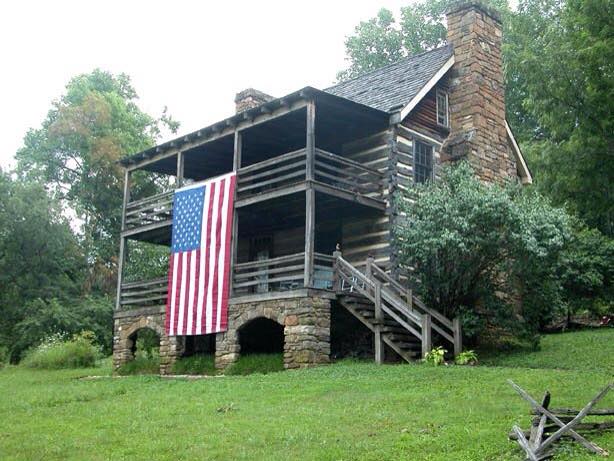
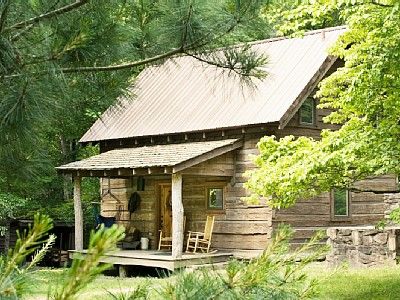
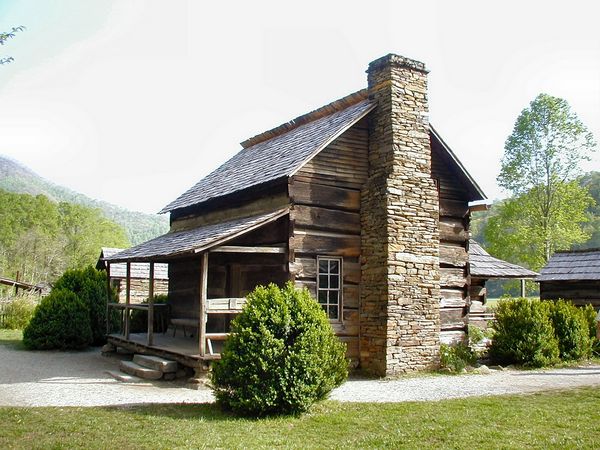
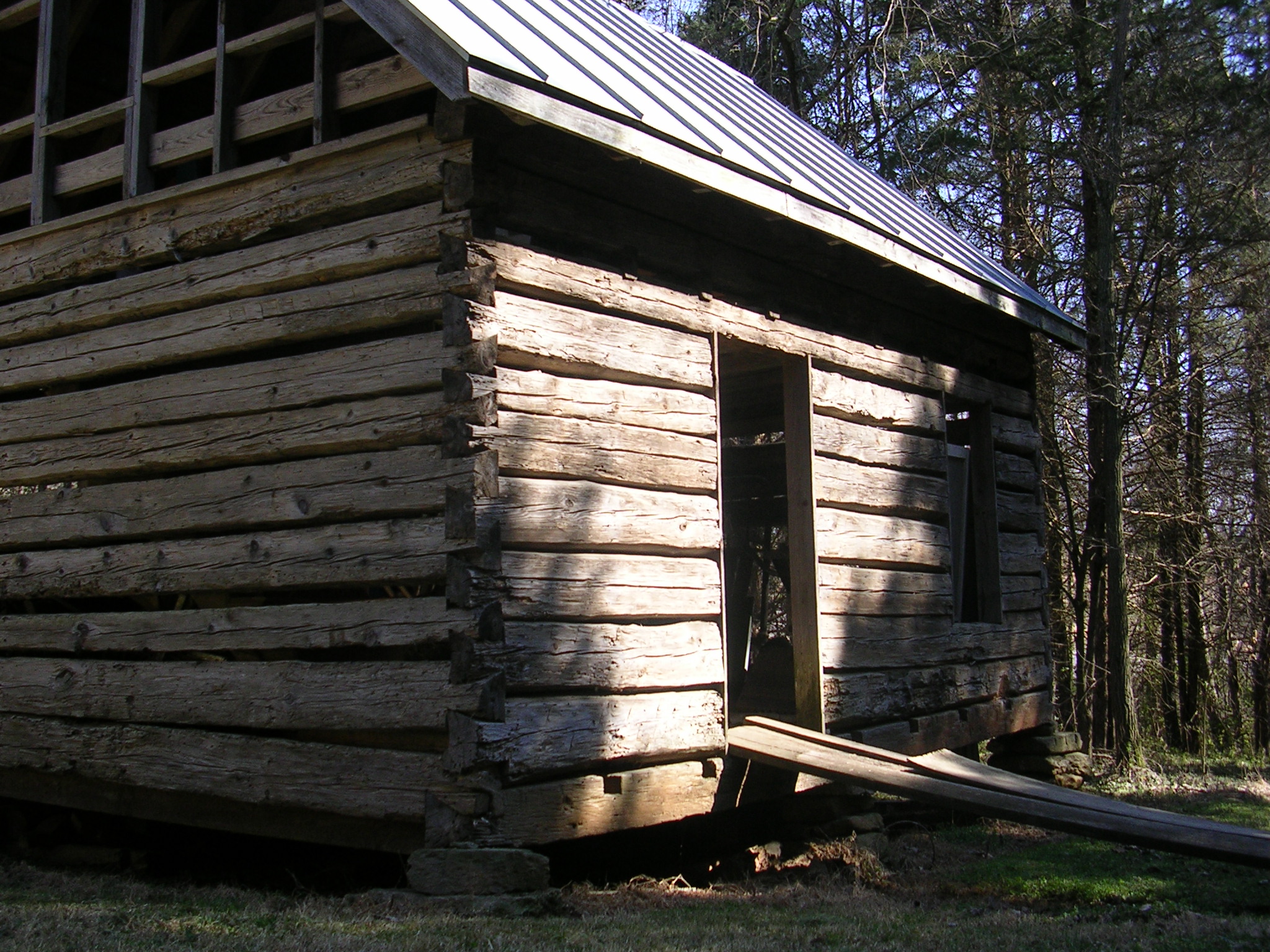
BTW… the log cabin seen in the photo above is NOT a “butt and pass” cabin, nor will you likely ever find an image of one of them on this website. The cabin above was built in the traditional log cabin manner, with hewn logs, notched corners, and chinking in between the courses… my favorite method to build a log home… the most popular, and a time proven method. I didn’t invent it… I simply tried it, many times, as well as other forms of construction, and discovered that it is BY FAR the best method. I’ve never met anyone who has built a cabin in the traditional manner who would then go on to build a “butt and pass” cabin for themselves.
For the record… if you can’t tell by now I am one of those who does not care for the “b&p” method, either the round pole system or the one of creating uniformly dimensional logs and then laying them one on top of the other much like a mason does his work, but with the added step of nailing (or screwing) each course down onto the previous one. It is within this later “uniform log” aspect of log building where I find my greatest concern.
If you choose to use timbers that are sized and shaped so that each is machined to the same thickness, just like pencils coming off an assembly line… I’d encourage you to consider a completely different path than building a log home and rather choose to build a timber-frame home. Most woodworkers I have met and worked with over the years would agree with me on that. (The timber-framing community has great respect towards handcrafted log cabins, but nothing but ridicule for a screwed-together lumber structure with no joinery).
I also have issue as to how these equally-sized timbers are assembled, where each flattened piece is laid on top of the other and then they are spiked together. Any time two pieces of wood come in direct contact with each other laid horizontally eventually water will find it’s way in between them and won’t come out until it rots both pieces of wood. I have seen this in nature and I’ve seen it hundreds of times in log homes that are built this way.
The only way to stop this decay process is through the constant application of coats of toxic sealers, and the installation of new caulking that must be maintained to be 100% impenetrable. Eventually any home will find itself being occupied by someone unaware of the need of frequent thorough maintenance and then the home will be lost.
If water were to find it’s way in between two logs of a traditionally built cabin it would encounter the naturally rounded top of the log and roll back out to the outside by following the hill-shaped contour of a horizontal log. Not so if a person chooses to use the perfectly sawn surfaces of this style of butt and pass log method. The flat rough surface of a sawmill cut behind a leaky chink joint would act like a sponge absorbing each drop of moisture, and with no means of shedding it, this moisture would eventually encourage mold and rot.
Building a butt and pass cabin is assembly line work of sorts. It’s not about crafting a log home, it’s about driving a spike or screwing a screw, one after the other. And if these spikes or screws ever decay, rust, or break… the house will fall to pieces.
Some would go as far as arguing that a “butt and pass” house is not even a log house. The definition of a log home is “a house made of logs that are notched together in the corners”. “Butt and pass” fails to meet even this most basic of definitions. I’d call these b&p homes “wood houses” or “timber houses”… houses where unfortunately the timbers were used in the worst possible way… where the wood is fully exposed to the weather, in a manner prone to rot, and built with no more applied craftsmanship demonstrated than the ability to repeatedly drive in large nails.
Log cabin construction evolved and improved over the course of centuries. It reached perfection during the early 1600’s and remained unchanged well into the late 1800’s… with little change or improvements occurring during this long period of time because…well… none was needed. By the late 1800’s, the popularity of log construction died due to the advent of inexpensive and much faster modern stick-framing. Those early log homes, today numbering in the tens of thousands, many two to three centuries old, still stand proud with no sealers or caulking ever having been applied. They have proven themselves to be durable, long-lasting, and nearly maintenance free. And, extremely attractive.
The oldest known traditionally built cabin (hewn) in the United States is now nearly 400 years old. I know of no round log cabins in the States that is over a hundred year old. And I know of no Butt and Pass cabin that is as old as I am. And yet the promoters of this form of log construction say it is more durable… what is the basis of such a claim?
In the traditional method of log home construction the logs were hewn flat on the interior and exterior faces of the log (they used a variety of axes to do this). There were a few reasons behind this including; aesthetics and function (most people like a somewhat flat wall surface their home) but more importantly this step exposed the durable heartwood layer of the log and removed the more rot resistant and bug loving sap layer of the wood. And, as one more bonus, these flattened faces created a drip edge that kept water outside of the home where it belongs. Check out these videos to learn more. here and here.
One has to wonder why were hundreds of thousands of log homes built the traditional way… homes that lasted for centuries… and that not one of those log builders ever thought to nail them together as in the b&p method? Not one of them. Were they all somewhat lacking in creative thought or inspiration back then? Or, did some of them try this technique and none of those cabins proved durable enough to still be around for us to see today?
I would ask that you compare photos of the historic log homes of our past to the modern “butt and pass” cabins of today and really “see” which you find more attractive. I’m sure those who have built cabins with this b&p method are proud of their homes… it’s hard not to love any home a person builds immediately after putting so much effort and money into it. I know this to be true… very early in my career in building homes I built a home of natural wood and stone. I was proud of that home for a long while… it took me a few years before I eventually came around to admitting to myself and others that it wasn’t the best home I could have built. That failure though led me in the years since to seek out the best alternative for every decision I make… especially when it comes to something as important and expensive as a house.
I discovered that new is not always better… sometimes it is, but often it is not. The butt and pass method was created at the same time that aluminum house wiring, vinyl siding, shag carpeting, and split level homes were all the rage. All low points in American housing.
To wrap this all up let me say…
Traditional log construction is the best means of building a log home… not just because it is “the old way of doing it”… no, it is simply the BEST method of log construction… then, now, and into the future. There will never be a better way. Some things cannot be improved upon.
And the good news is that Traditional Log Construction is not a method that can be patented or sold… it is free for us all to use.
If you try it, you will never regret it. (Regret, is best avoided… it’s a miserable thing to live with.)
Thank you for your time… and please, for further commentary on this subject, read the comments below…
Originally posted 2017-06-12 16:22:17.